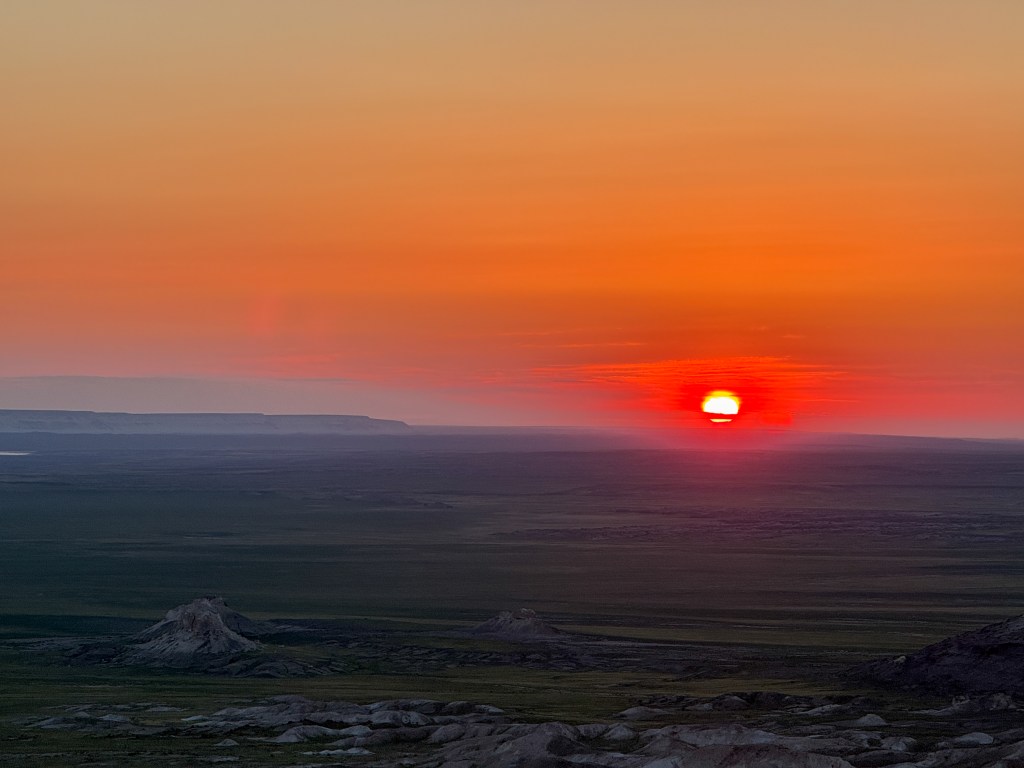

I am standing on a windswept plateau in the far east of Turkey, just a few metres from the modern-day border with Armenia. No fence, no official crossing - just a river in the gorge before me. And yet, it was precisely here that once stood one of the greatest and wealthiest cities of the medieval world.
Ani.


Today, the place appears abandoned and almost forgotten. Back then, it was the opposite: a centre of power, a trading hub, a city with international appeal.
Ani stood at a crucial crossroads. Merchants from Byzantium, Persia, Central Asia, and the Arab world met here – on a central section of the Silk Road. Whoever controlled Ani, controlled trade, taxes, and influence.
In the 10th century, the city became the capital of an Armenian kingdom and experienced explosive growth. Contemporary accounts speak of tens of thousands of inhabitants. Today, only ruins remain: walls, churches, bridges, residential buildings – scattered over a vast area, without barriers, without tourist crowds. One moves freely through history.
Ani was often called the „City of 1001 Churches“. An exaggeration? Perhaps. Impressive? Definitely.


As I walk, I keep coming across the remains of sacred buildings: great cathedrals with high arches, little chapels half-sunk into the ground, fragments of frescoes that have defied the wind – and visitors – for centuries.
What's striking is that these churches don't tell a uniform story. Armenian, Byzantine, and later Islamic influences stand right next to each other. Ani was never unambiguous – and perhaps therein lies its significance.
However, this diversity not only made the city rich but also vulnerable.
Over the centuries, Ani changed hands repeatedly. Byzantines, Seljuks, Mongols – they all left their mark. Earthquakes did their part. Trade routes shifted, as did centres of political power. The city lost importance.
At some point, Ani was just... empty.


No grand final destruction, no spectacular demise. Rather, a slow disappearance. Buildings decayed, people moved away, life shifted elsewhere. Perhaps that is precisely what is so unsettling – and fascinating at the same time.
Today, Ani lies on one of the region's most politically sensitive borders. Armenia begins directly opposite. You can see it. But you cannot enter it. This border location shapes the atmosphere: military posts in the distance, no paths across the river, no connection to the once-unified region.
Ani is thus not only a lost city, but also a symbol of interrupted cultures, unresolved tensions, and a history that was never fully concluded.
While other historical ruins are overrun with visitors, I walked here for hours almost entirely alone. No souvenir shops, just a few information boards, no artificially staged experience.
And perhaps that's also why the world forgot this empire. It doesn't fit into simple national narratives. It doesn't clearly belong to one country, one religion, one era. Ani was always in between.
As I walk in the late afternoon, clouds are gathering, the wind is picking up. I turn around once more and see the cathedral in the diffuse light.
What do I take with me? Not just photos and facts – but the feeling of having witnessed something greater than any of today's maps.
Ani was recognised as a UNESCO World Heritage Site in 2016.
I've stolen the title for this episode from here: The empire the world forgot
And for those who haven't had enough of Ani: in this post, you'll find more information (in English) and truly fascinating pictures of this special place.