
You can find an English version, along with tips for cyclists, Here.
As agreed the day before, I drove to the ferry terminal in Alat at 10 am. What immediately struck me was not what was there – but what was missing: bustle. No shouting, no whistling, no frantic shunting. None of the things you usually experience in harbours when ships arrive or depart and everyone acts as if the world economy depends on it. It was so quiet that even my hope of crossing on the same day slowly evaporated.
This impression was reinforced when, after the obligatory rituals – passport, ticket, luggage – I was led into a waiting room. The room was not only empty of people, it also seemed permanently optimised for this state. I was kindly shown where the toilets were and – this was new – where there were sleeping facilities. In response to my question about „When?“, I was met with a shrug. „I'll pick you up here in good time,“ the man dictated calmly into my translation app.


So I started to settle in as if I intended to grow old here: cycling shoes off, Birkenstocks on, table moved, socket located, laptop set up. At precisely that moment, when a state of temporary permanence had been achieved, the door opened. I was asked to come with them. So, everything back into its mobile primal state and after them.
A minivan was waiting outside, which I was to follow. Ten minutes later, I was on board the ship.


I unloaded my bags, stowed and secured my bike, and then battled my way up a particularly steep flight of stairs.


Everything about that ship had the charm of a 1970s German Federal Railway carriage: functional, indestructible, and utterly uninterested in whether you felt comfortable. After some wandering, I finally found someone who assigned me a cabin and wordlessly shoved bedding into my hand. Cabin number 3 – right at the front, with a view of the bow. On Color Line or Smyril, they probably would have called that a „Captain's Suite.“ Here, it was simply Cabin 3.


On the passenger list, I'd previously read that a total of 28 people were meant to be on board. Besides me, another German and a British citizen – I found them later: two backpackers on their way to China, so people with time and a certain faith in improvisation.


So I had company for the three daily meals served on board – which, by the way, were included in the $70 ticket price. The other passengers were, without exception, men, all of them truckers.


I got chatting to some of them. One, from Bulgaria, was transporting air conditioning units from Duisburg to Tashkent, and another, from Ukraine, was on his way to Astana. They said they were each on the road for around 30 days – long journeys, endless roads, and a time away from home.
The ship departed at 4 PM. Without announcement and without a safety briefing. Lunch – precisely at 11:30 AM, as usual – had long since been served. The crew is on board for three months at a time and cooks three meals a day, regardless of whether the ship is sailing, waiting, or drifting somewhere between the past and its destination.

The crossing was calm, almost uneventful, and so we finally reached the destination port near Kuryk around midday local time the following day.
Ah, yes: The ship is called Professor Gül and was built in Yugoslavia in 1986. A floating relic from a state that no longer exists – which somehow fits with the experience.

What followed was crossing the border into country number 13 of this project – an event that was less reminiscent of a modern state border than of a living open-air museum of post-Soviet administrative art. The spectacle lasted two full hours, including a medical examination as in the good old days of Corona: measuring temperature, frowning, meaningful nodding.
Parallel to this, the actual border ritual began. Officials came and went, always with new ideas on how to facilitate my stay – or at least my crossing of the border. For 20 US dollars, for example, they kindly explained, the passport control could be „accelerated“. Another official pointed conspicuously often at my phone case. His, he discreetly informed me, was unfortunately broken.
A fellow backpacker learned that cameras are apparently considered luxury items here: the demand for an import permit was 100 US dollars. And when the officials finally noticed that the backpackers hadn't yet arranged a taxi or shuttle into the city, they smelled an opportunity. They willingly offered them help – at a price that would probably have justified a limousine ride through Monaco.
To crown it all, I was asked (or rather compelled) to carry my bicycle up a flight of stairs. The main gate, they explained with a shrug, was unfortunately broken. What a tragic coincidence. I pushed, carried, and sweated – not without the quiet suspicion that this was retribution for my pronounced reluctance to pay.

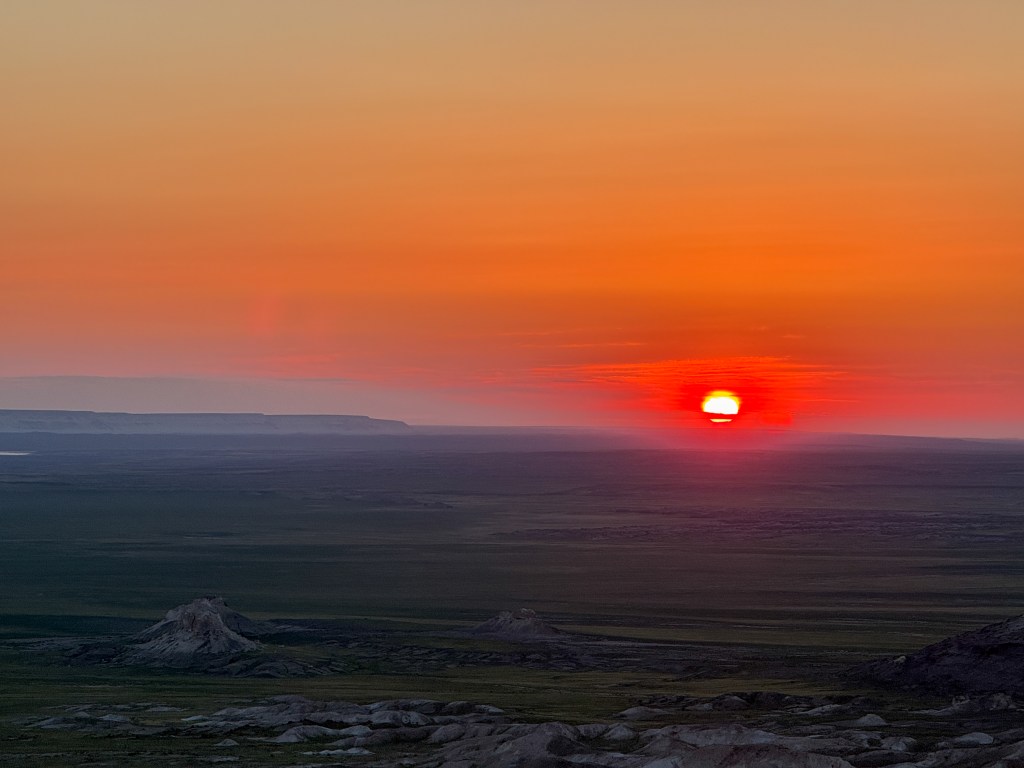
I'm in Kazakhstan now...